What Is Affiliate Marketing? A Simple Beginner's Guide
What is affiliate marketing and how does it work? A simple beginner's guide to commissions, networks, choosing products, disclosure and getting started.
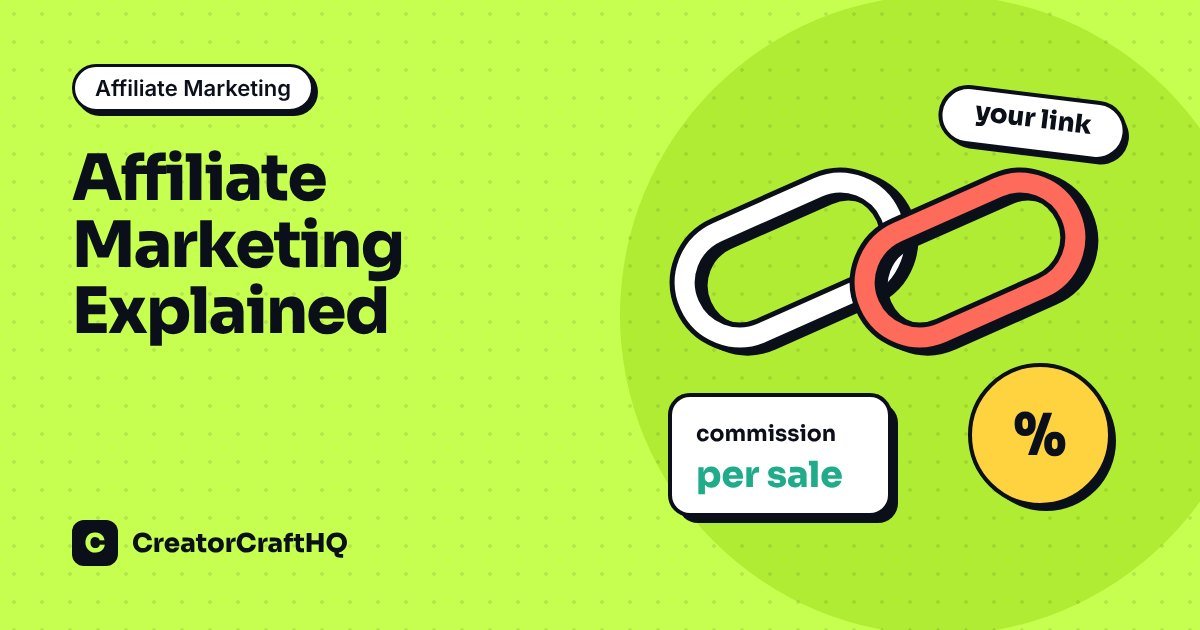
Affiliate marketing is a way to earn a commission by recommending other people's products. You share a special tracking link, and when someone buys through it, you get paid a percentage of the sale. You don't create the product, store stock, handle payments or deal with customer support.
It's one of the most common ways bloggers, YouTubers and email newsletter writers make money. It's also one of the most misunderstood, thanks to endless "passive income" promises. This guide explains how it really works.
How affiliate marketing works
There are four parties in every affiliate sale:
- The merchant (vendor): the company that makes or sells the product.
- The affiliate: you, the person recommending it.
- The customer: the person who buys.
- The affiliate network or program: the platform that tracks clicks and sales and pays commissions.
The process:
- You join an affiliate program and get a unique link.
- You share that link in a blog post, video description or email.
- A reader clicks the link, and a tracking cookie or similar method records that they came from you.
- If they buy within the tracking window, the sale is credited to you.
- You receive your commission, usually after a short waiting period for refunds.
The customer pays the same price. The commission comes out of the merchant's revenue.
Types of affiliate commissions
- Pay per sale: you earn a percentage or fixed amount when someone buys. This is the most common.
- Recurring commission: you earn every month the customer stays subscribed, common with software.
- Pay per lead: you earn when someone signs up or fills in a form.
Commission rates vary widely. Physical products on large retail programs often pay a small percentage, while digital products like software and online courses often pay much higher percentages because they cost little to deliver.
Popular affiliate networks and programs
- Amazon Associates and other retail programs: huge product range, lower commission rates.
- Digital product marketplaces such as ClickBank, Digistore24, JVZoo and WarriorPlus: software, courses and digital tools, often with high commission rates. Quality varies, so vet products carefully.
- Software partner programs: many tools (email platforms, website builders, design apps) run their own programs, often with recurring commissions.
- Affiliate networks like Impact, CJ and ShareASale: thousands of brands in one place.
How to choose products to promote
The best affiliate marketers promote products they'd recommend even without a commission. Before promoting anything, ask:
- Have I used it, or can I test it?
- Does it genuinely solve a problem for my audience?
- Is the sales page honest? Be wary of exaggerated income claims, fake countdown timers and "secret system" language.
- What's the refund rate? Marketplaces often show this. High refunds suggest disappointed buyers, and refunded sales mean lost commissions.
- Who is the vendor? Look for a track record and real support.
Promoting a bad product might earn one commission, but it costs you your audience's trust.
Where affiliates get traffic
An affiliate link is useless without people to see it. The main traffic sources are:
- Blogs and SEO: write helpful articles that rank on Google. Start with our keyword research guide.
- YouTube: tutorials and reviews work extremely well. See our faceless YouTube channel guide.
- Email lists: recommend tools to subscribers who already trust you. Learn how in our email list guide.
- Social media: short-form videos, carousels and posts, with links in your bio.
- Paid ads: faster but riskier; best left until you understand what converts.
Content types that convert well
- Honest reviews: "[Product] review: what I liked, what I didn't"
- Comparisons: "[Tool A] vs [Tool B]: which is better for beginners?"
- Best-of lists: "7 best free video editors"
- Tutorials: "How to [result] with [tool]", which naturally shows the product in use
- Resource pages: "The tools I use", updated regularly
Disclosure: be transparent
You must tell your audience when you use affiliate links. In the US, the FTC requires clear disclosure; in India, ASCI guidelines require disclosure of material connections; many other countries have similar rules. Most affiliate programs also require it.
Good disclosure is:
- Clear: "I may earn a commission if you buy through my links, at no extra cost to you."
- Close to the link: near the top of a post or at the start of a video description, not hidden in the footer.
Read our own affiliate disclosure for an example.
A realistic look at earnings
Affiliate marketing can become a meaningful income, but it's not quick or guaranteed. Most beginners earn little or nothing in their first months, because it takes time to build traffic and trust. Those who succeed usually:
- Focus on one niche
- Publish helpful content consistently for months
- Build an email list
- Promote fewer, better products
Treat it like building a small business, not a lottery ticket.
How to start in 5 steps
- Pick a niche you understand and that has products people buy.
- Choose one main platform, like a blog or YouTube channel, and start publishing helpful content.
- Join two or three relevant affiliate programs.
- Create review, comparison and tutorial content around products you've tested.
- Track results and do more of what works.
FAQ
Is affiliate marketing free to start?
Joining most affiliate programs is free. You may spend a little on a domain and hosting for a website, but you can also start with free platforms like YouTube.
How much do affiliate marketers make?
Earnings range from nothing to full-time incomes. It depends on your niche, traffic, audience trust and the products you promote. There's no guaranteed amount.
Do I need a website for affiliate marketing?
Not necessarily. You can use YouTube, social media or an email list. A website gives you more control and long-term search traffic, though.
Is affiliate marketing legit?
Yes. It's a standard marketing model used by major retailers and software companies. Be cautious of courses or products that promise easy, guaranteed income.
Disclosure: this article may contain affiliate links. We only recommend tools we would use ourselves. Read our affiliate disclosure.